
Here is a little more complicated levitation trick explained by Criss Angel.
Thursday, November 30, 2006
Criss Angel Shows You How to Levitate
One Way to "Magically" Levitate
In Formative Years, the Sun Had Sisters

By Robin Lloyd on Space.com
The Sun had sisters when it was born, according to new research, hundreds to thousands of them.
And at least one was a supernova, providing further support for the idea that there could be lots of planets around other stars since our solar system emerged in such an explosive environment.
"We know that the majority of stars in our galaxy were born in star clusters," said Leslie Looney, who arrived at the solar sibling finding along with his colleagues at the University of Illinois at Urbana-Champaign. "Now we also know that the newborn solar system not only arose in such a cluster, but also survived the impact of an exploding star. This suggests that planetary systems are impressively rugged and may be common in even the most tumultuous stellar nurseries."
The evidence for the solar sisters was found in daughters—such as decayed particles from radioactive isotopes of iron—trapped in meteorites, which can be studied as fossil remnants of the early solar system.
These daughter species allowed Looney and his colleagues to discern that a supernova with the mass of about 20 suns exploded relatively near the early Sun when it formed 4.6 billion years ago; and where there are supernovas or any massive star, you also see hundreds to thousands of sun-like stars, he said.
The cluster of thousands of stars dispersed billions of years ago due to a lack of gravitational pull, Looney said, leaving the sisters "lost in space" and our Sun looking like an only child ever since, he said.
The research will be detailed in the Astrophysical Journal.
The finding also has exciting implications for life in other solar systems, Looney said, since most stars are born in clusters.
"If our favorite planet, Earth, was born in the nasty environment of a cluster, with the increased radiation and gravitational effects, then the majority of stars could also have planets," Looney told SPACE.com. "Not only have planets, but have planets where terrestrial life can occur."
Astronomers now should focus more attention on how planets form in clusters, he said. "It may be easier to form planets than we expected," he said.
Isotopes and supernovas
When massive stars explode and go supernova, they create radioactive isotopes that are blown outward and mix with nebular gas and dust as they condense into stars and planets. In the case of our solar system, that means some of the isotopes were trapped in the rocks that hardened to form the early solar system. Meteorites are remnants of those rocks, so they contain the radioactive offspring, or daughter species, of the isotopes created by the supernova.
Looney and his colleagues used measured abundances of the daughter species to calculate that the supernova sibling was about 0.32 to 5.22 light-years from the Sun. The closest star system to the Sun today is Alpha Centauri at 4.36 light-years.
"The supernova was stunningly close," said Looney's co-author Brian Fields. "Our solar system was still in the process of forming when the supernova occurred."
450GB of Data Can Now Be Stored on Paper
Amazing. Someone was definitely thinking out of the box. Now if we could just bring back punch cards!
M. A. Siraj, Arab News
BANGALORE, 18 November 2006 — Is it time to say goodbye to CDs, DVDs, Zip drives?
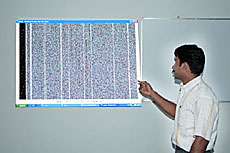
A Kerala student has developed a technique for portable data whereby the data can now be stored on ordinary paper. And to boot, larger amounts of data can be had on lesser space.
The immediate question that pops into the mind is how to retrieve the data. Will it be as easy as feeding a floppy disc or CD into the drive and having it on the monitor? Perhaps it will be much easier than that. The piece of paper or even plastic sheet storing the data has only to be scanned in the scanner and read over the monitor. So wait, scan drive would be part of your computer.
Named “Rainbow Technology”, the new technique is the brainchild of Sainul Abideen, who has just finished his MCA at Muslim Educational Society Engineering College in Kuttipuram in Kerala’s Malappuram district.
The extremely low-cost technology will drastically reduce the cost of storage and provide for high-speed storage as well. Files in any format such as movie files, songs, images and text can be stored using this technology.
Currently, of the several options available for data storage, DVDs are the best mode. But a high quality DVD, which is very expensive can store only about 4.7 gigabyte (GB) of data. In contrast, the Rainbow Versatile Disc (RVD) can store 90 to 450 GB. And Sainul has simultaneously developed a scanning drive based on his Rainbow software which will come in smaller sizes to be initially carried with the laptops and later to fit into their bodies.
Sainul says a CD or DVD consumes 16 grams of polycarbonate, a petroleum by-product. While a CD costs Rs.15 (SR1.25), his paper or plastic-made RVD will cost just about Rs.1.50 and has 131 times more storage capacity.
Sainul, who has just turned 24, says that instead of using zeroes and ones for computing, he used geometric shapes such as circles, squares and triangles for computing which combine with various colors and preserve the data in images. An RVD therefore looks like a printout of modern art.
He says all kinds of data has to be first converted into a common format called “Rainbow Format.”
In a demo at his college laboratory, this writer could see text typed on 432 pages of foolscap paper being stored in a four square inch paper. The writer was even shown a 45-second video clip of a Malayalam film stored on an ordinary paper. Sainul was guided by Prof. Hyderali, head of the MCA Department at the College in all these projects.
Sainul says the biggest advantage of the new technology will be the biodegradable nature of his storage devices which will do away with e-waste pollution.
He says with the popularity of his Rainbow Technology, computer or fashion magazines in future need not carry CDs in a pack.
The computable data printed on a paper can be attached in a tearable sheet and will be capable of carrying even software programs, or movies, MP3 data or text. Sainul is promoting the theme of disposable storage and says newspapers, magazines and video albums could benefit from the idea and also distribute their material in this form in order to curtail use of paper and facilitate the disposal of the waste.
Sainul is simultaneously molding the technology into “Rainbow Cards” which will be of SIM card size and store 5 GB of data equivalent to three films of DVD quality. Sainul says as “Rainbow Cards” will become popular, Rainbow Card Readers will replace CD drives of mobile phone and computer notebooks and will enable more data in portable forms for mini digital readers.
Large-scale manufacture of the Rainbow card will bring down its cost to only 50 paise (half a rupee). He is currently in consultation with a UK-based company for manufacture of the Rainbow Cards.
Sainul has also put forward the idea of databank with Rainbow Technology, which will enable huge servers with a high storage capacity.
Quoting a research study carried out in the US in 2003, he says the entire static data in the US would require $5 billion (Indian Rupees 230 billion) for storage with the current storage devices. But Rainbow based databank could reduce the cost to Rs.3.5 million. He says he could construct databank with almost 123.60 Peta Byte (PB) capacity.
Sainul is also working on project Xpressa, a software package for regional languages. This will enable the Internet browser to access the newspapers available on Internet through mobile phone in audible form.
Sainul Abideen can be contacted at: 0091-98950-81493, Res: 0091-494-2495493, email: mysainul@yahoo.com
Tenacious D - Devil May Fry Game

If you like Guitar Hero and Tenacious D then check out this quick flash game. Go ahead and waste 5 minutes.
Sunday, November 26, 2006
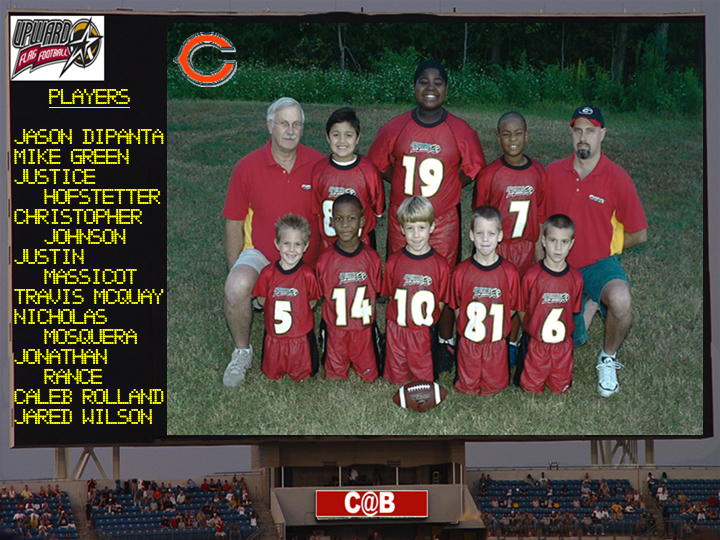
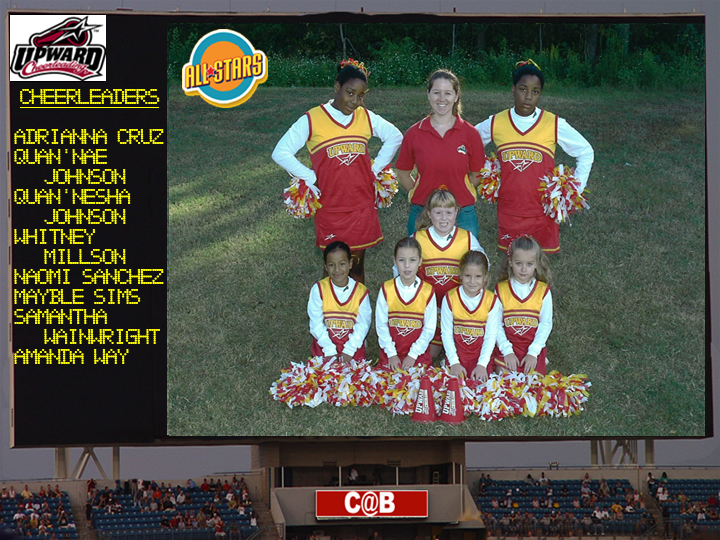
Church @ Bellair Upward Flag Football and Cheerleading Team Photos and Video
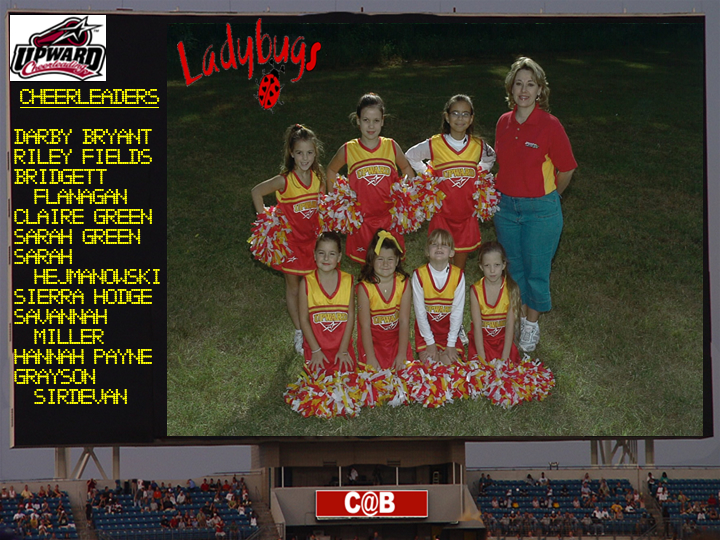
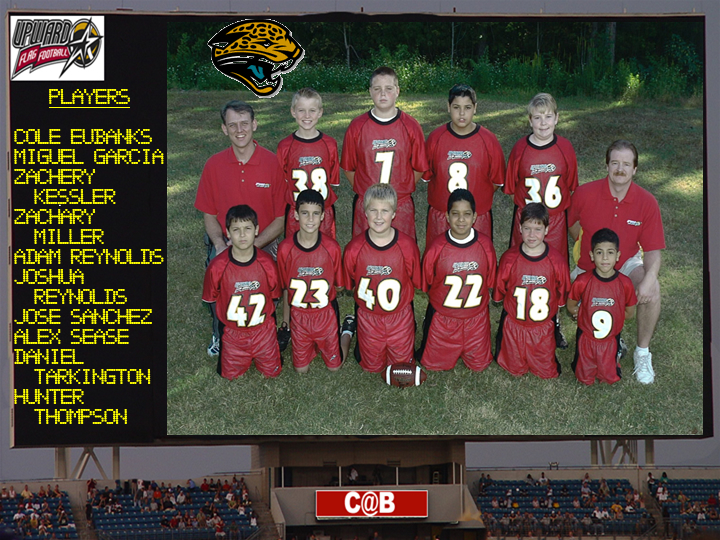
The Church @ Bellair hosted the Upward Flag Football Awards last week to a packed house. It was great seeing the kids so excited about their teams. Here are the team pictures (to see them all click Read More at the bottom of the post) and a link to the opening video for those interested. For anyone wishing to attend C@B here is a link to their website. We meet at 6pm every Saturday at the Orange Park Junior High School. Come see us!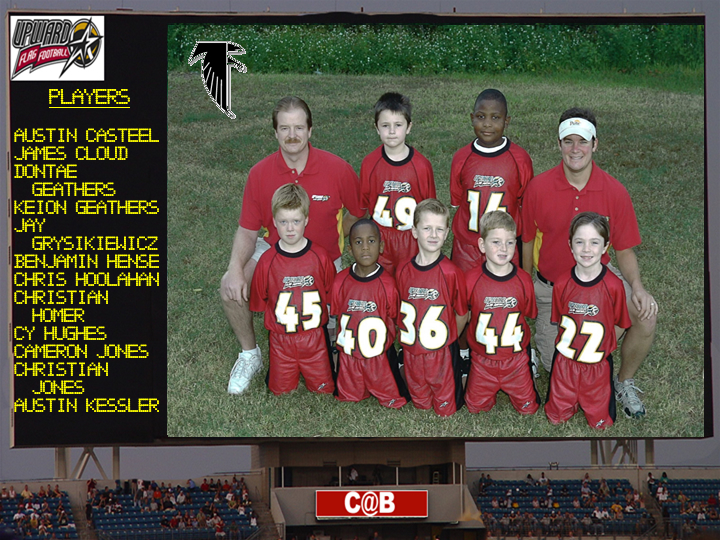
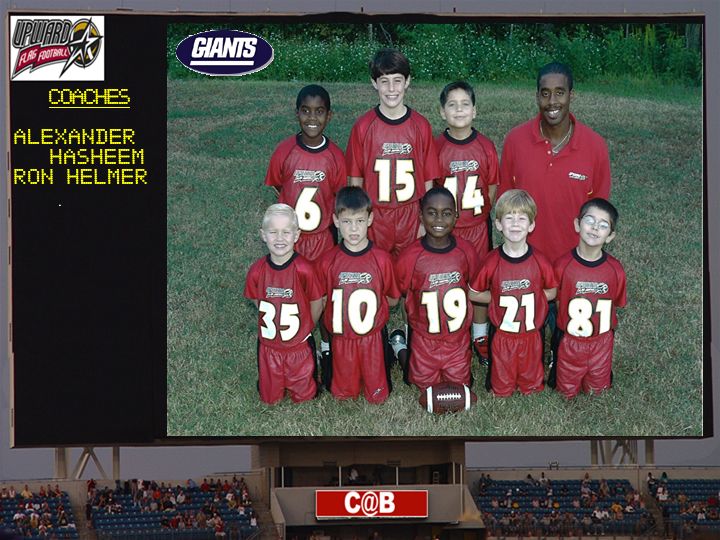
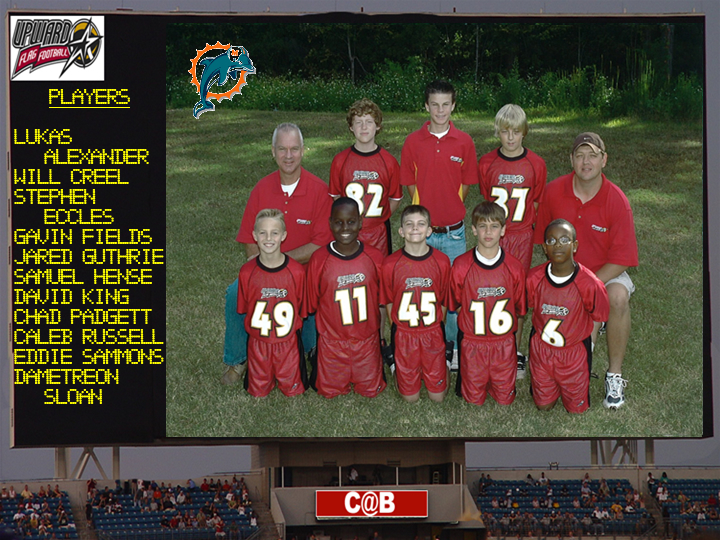
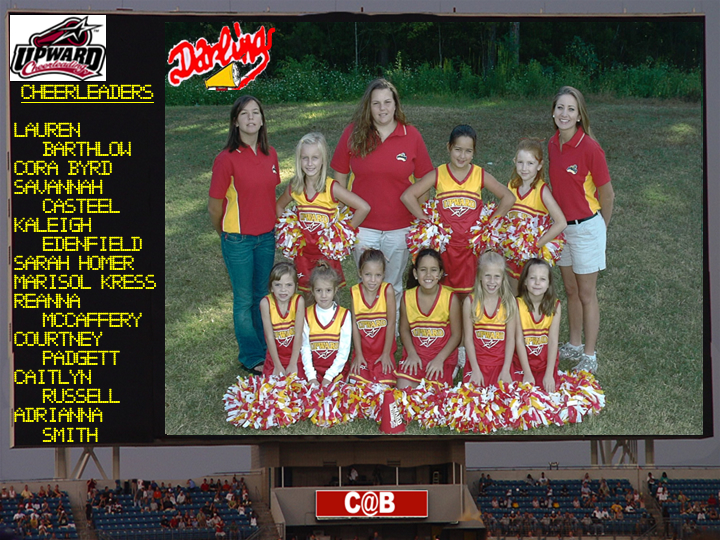
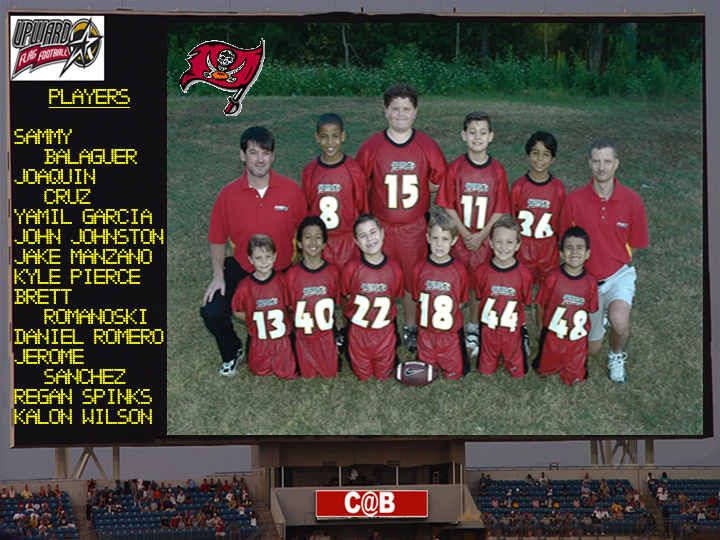
Thursday, November 23, 2006
"As God Is My Witness, I Thought Turkeys Could Fly"
from politics of dancing website
Cincinnati, OH--An advertising stunt dreamed up by a local Cincinnati radio station went terribly wrong when twenty live turkeys plummeted to their deaths after being dropped out of a helicopter under the misguided assumption that they would all just fly away.
"The turkeys were hitting the ground like sacks of wet cement," stated Les Nessman, who reported the event live for station WKRP from the parking lot of the Pinedale Shopping Mall.
"It was just terrible. People started to panic and were running around the parking lot screaming. One of the turkeys even went right through the windshield of a parked car."
Station Manager Arthur Carlson took full responsibility for the chaos caused by the Thanksgiving Day promotion, claiming that "as God is my witness, I thought turkeys could fly." The station promised to reimburse anybody who suffered property damage as a result of this stunt.
WKRP is a "beautiful music" station that ranks 16th in the 18 station Cincinnati market. They are currently considering a format change in hopes of boosting their dismal ratings.
Thursday, November 16, 2006
10 Advantages of Doing Ministry Without a Ministry Strategy
Another great post from Tony Morgan's website.
1. You give the loudest person the opportunity to decide what happens at your church.
2. Sharp leaders who are accustomed to serving in organizations with clearly defined plans for future growth won’t stick around your church. That means more ministry for you!
3. You’ll get to hone your debating skills as people argue about what to do next.
4. More meetings! Where there's no strategy, the meetings flourish.
5. Some people call them church splits. We like to call them church plants. More mother churches!
6. You don’t have to worry about celebrating success, because no one even knows what success looks like. It’s just better to keep that a secret.
7. Rather than trying to discern God’s will for your ministry, you can just rely on dumb luck.
8. You don’t have to pray as much, because there's nothing to pray for. As an added bonus, that means you don’t have to develop as much faith either—whatever happens…happens.
9. You can count your offerings a lot faster, because people will save their financial gifts for organizations that actually have a plan for the money they receive.
10.Your lack of ministry strategy, which is a ministry strategy, will do just fine in Nothing, Arizona.
I probably shouldn't post on my blog when I'm in a fiesty mood, should I? Regardless of how you answer that question, I still recommend that you don't vacation in Nothing, Arizona and don't do ministry without a ministry strategy.
Robot Discovers Itself, Adapts to Injury
A Robot that can repair itself. More than that; it can adapt to problems, albeit simple ones, and find a solution. Soon (meaning decades) we will have robots that conform themselves to the assigned task on the fly. Imagine the benefits in space and planetary exploration. No more waiting for Earth to tell it what to do.
From Physorg website.Nothing can possibly go wrong ... go wrong ... go wrong ... The truth behind the old joke is that most robots are programmed with a fairly rigid "model" of what they and the world around them are like. If a robot is damaged or its environment changes unexpectedly, it can't adapt.
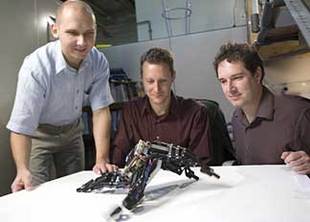
So Cornell researchers have built a robot that works out its own model of itself and can revise the model to adapt to injury. First, it teaches itself to walk. Then, when damaged, it teaches itself to limp.
Although the test robot is a simple four-legged device, the researchers say the underlying algorithm could be used to build more complex robots that can deal with uncertain situations, like space exploration, and may help in understanding human and animal behavior.
The research, reported in the latest issue (Nov. 17) of the journal Science, is by Josh Bongard, a former Cornell postdoctoral researcher now on the faculty at the University of Vermont, Cornell graduate student Viktor Zykov and Hod Lipson, Cornell assistant professor of mechanical and aerospace engineering.
Instead of giving the robot a rigid set of instructions, the researchers let it discover its own nature and work out how to control itself, a process that seems to resemble the way human and animal babies discover and manipulate their bodies. The ability to build this "self-model" is what makes it able to adapt to injury.
"Most robots have a fixed model laboriously designed by human engineers," Lipson explained. "We showed, for the first time, how the model can emerge within the robot. It makes robots adaptive at a new level, because they can be given a task without requiring a model. It opens the door to a new level of machine cognition and sheds light on the age-old question of machine consciousness, which is all about internal models."
The robot, which looks like a four-armed starfish, starts out knowing only what its parts are, not how they are arranged or how to use them to fulfill its prime directive to move forward. To find out, it applies what amounts to the scientific method: theory followed by experiment followed by refined theory.
It begins by building a series of computer models of how its parts might be arranged, at first just putting them together in random arrangements. Then it develops commands it might send to its motors to test the models. A key step, the researchers said, is that it selects the commands most likely to produce different results depending on which model is correct. It executes the commands and revises its models based on the results. It repeats this cycle 15 times, then attempts to move forward.
"The machine does not have a single model of itself -- it has many, simultaneous, competing, different, candidate models. The models compete over which can best explain the past experiences of the robot," Lipson said.
The result is usually an ungainly but functional gait; the most effective so far is a sort of inchworm motion in which the robot alternately moves its legs and body forward.
Once the robot reaches that point, the experimenters remove part of one leg. When the robot can't move forward, it again builds and tests 16 simulations to develop a new gait.
The researchers limited the robot to 16 test cycles with space exploration in mind. "You don't want a robot on Mars thrashing around in the sand too much and possibly causing more damage," Bongard explained.
The underlying algorithm, the researchers said, could be applied to much more complex machines and also could allow robots to adapt to changes in environment and repair themselves by replacing parts. The work also could have other applications in computing and could lead to better understanding of animal cognition. In a way, Bongard said, the robot is "conscious" on a primitive level, because it thinks to itself, "What would happen if I do this?"
"Whether humans or animals are conscious in a similar way -- do we also think in terms of a self-image, and rehearse actions in our head before trying them out -- is still an open question," he said.
Source: Cornell University
Wednesday, November 15, 2006
50 Interesting Science Facts
50 Interesting Science Facts
From Immense World website.
1 – The speed of light is generally rounded down to 186,000 miles per second. In exact terms it is 299,792,458 m/s (equal to 186,287.49 miles per second).
2 – It takes 8 minutes 17 seconds for light to travel from the Sun’s surface to the Earth.
3 – 10 percent of all human beings ever born are alive at this very moment.
4 – The Earth spins at 1,000 mph but it travels through space at an incredible 67,000 mph.
5 – Every year, over one million earthquakes shake the Earth.
6 – When Krakatoa erupted in 1883, its force was so great it could be heard 4,800 kilometers away in Australia.
7 – Every second around 100 lightning bolts strike the Earth.
8 – Every year lightning kills 1000 people.
9 – In October 1999 an Iceberg the size of London broke free from the Antarctic ice shelf .
10 – If you could drive your car straight up you would arrive in space in just over an hour.
11 – Human tapeworms can grow up to 22.9m.
12 – The Earth is 4.56 billion years old…the same age as the Moon and the Sun.
13 – The dinosaurs became extinct before the Rockies or the Alps were formed.
14 – Female black widow spiders eat their males after mating.
15 – When a flea jumps, the rate of acceleration is 20 times that of the space shuttle during launch.
16 – If our Sun were just inch in diameter, the nearest star would be 445 miles away.
17 – Astronauts cannot belch – there is no gravity to separate liquid from gas in their stomachs.
18 – The air at the summit of Mount Everest, 29,029 feet is only a third as thick as the air at sea level.
19 – One million, million, million, million, millionth of a second after the Big Bang the Universe was the size of a …pea.
20 – DNA was first discovered in 1869 by Swiss Friedrich Mieschler.
21 – The molecular structure of DNA was first determined by Watson and Crick in 1953.
22 – The first synthetic human chromosome was constructed by US scientists in 1997.
23 – The thermometer was invented in 1607 by Galileo.
24 – Alfred Nobel invented dynamite in 1866.
25 – Wilhelm Rontgen won the first Nobel Prize for physics for discovering X-rays in 1895.
26 – The tallest tree ever was an Australian eucalyptus – In 1872 it was measured at 435 feet tall.
27 – Christian Barnard performed the first heart transplant in 1967 – the patient lived for 18 days.
28 – An electric eel can produce a shock of up to 650 volts.
29 – ‘Wireless’ communications took a giant leap forward in 1962 with the launch of Telstar, the first satellite capable of relaying telephone and satellite TV signals.
30 – The Ebola virus kills 4 out of every 5 humans it infects.
31 – In 5 billion years the Sun will run out of fuel and turn into a Red Giant.
32 – Giraffes often sleep for only 20 minutes in any 24 hours. They may sleep up to 2 hours (in spurts – not all at once), but this is rare. They never lie down.
33 – There are 60,000 miles of blood vessels in the human body.
34 – An individual blood cell takes about 60 seconds to make a complete circuit of the body.
35 – On the day that Alexander Graham Bell was buried the entire US telephone system was shut down for 1 minute in tribute.
36 – The low frequency call of the humpback whale is the loudest noise made by a living creature.
37 – A quarter of the world’s plants are threatened with extinction by the year 2010.
38 – Each person sheds 40lbs of skin in his or her lifetime.
39 – At 15 inches the eyes of giant squids are the largest on the planet.
40 – The Universe contains over 100 billion galaxies.
41 – Wounds infested with maggots heal quickly and without spread of gangrene or other infection.
42 – More germs are transferred shaking hands than kissing.
43 – The fastest speed a falling raindrop can hit you is 18mph.
44 – It would take over an hour for a heavy object to sink 6.7 miles down to the deepest part of the ocean.
45 – Around a million, billion neutrinos from the Sun will pass through your body while you read this sentence.
46 – The deepest part of any ocean in the world is the Mariana trench in the Pacific with a depth of 35,797 feet.
47 – Every hour the Universe expands by a billion miles in all directions.
48 – Somewhere in the flicker of a badly tuned TV set is the background radiation from the Big Bang.
49 – Even traveling at the speed of light it would take 2 million years to reach the nearest large galaxy, Andromeda.
50 – A thimbleful of a neutron star would weigh over 100 million tons.
Subscribe to:
Posts (Atom)


 Posts
Posts

